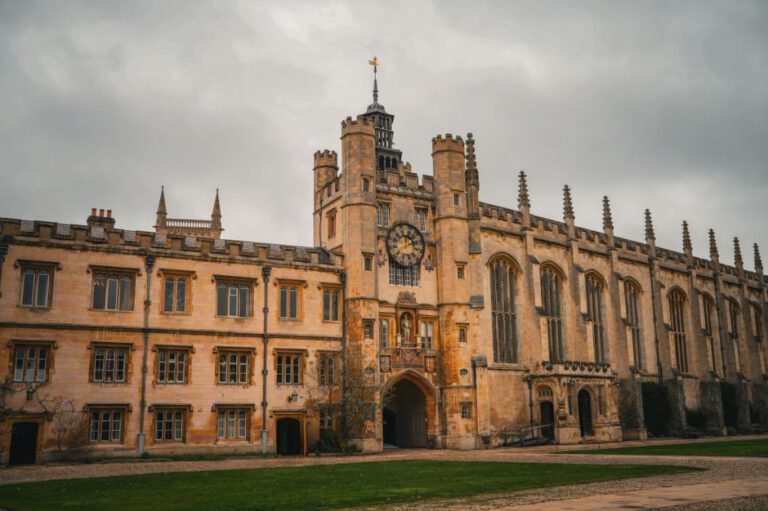
The origins of the University of Salamanca: historical context, birth and consolidation of a decisive intellectual center for Europe (Part 1)
1. Medieval Europe and the birth of universities
1.1. The cultural transformation of 12th century Europe
The birth of the University of Salamanca cannot be understood without first observing the profound cultural change that Europe experienced between the 11th and 13th centuries. During that period, the continent experienced a process of economic recovery, demographic growth, and political reorganization that radically transformed urban and intellectual life. After centuries marked by political fragmentation after the fall of the Roman Empire, more stable kingdoms began to consolidate, cities grew and a new urban bourgeoisie linked to commerce, administration and law developed. In this context, an unprecedented need for technical and intellectual training appeared. It was no longer enough to have monasteries as exclusive centers of knowledge. The new urban societies needed jurists, administrators, notaries, translators and theologians prepared to manage much more complex political and economic structures.
The expansion of Mediterranean and Atlantic trade also favored the circulation of manuscripts, ideas and knowledge. Europe began to rediscover classical Greek and Roman texts thanks to Arabic and Jewish translations carried out mainly in the Iberian Peninsula. Works by Aristotle, Galen and Euclid, unknown for centuries to much of Western Europe, reappeared in the great cultural centers of the continent. This phenomenon generated an authentic intellectual revolution. Cathedral schools began to evolve into permanent institutions of higher learning, giving rise to the first European universities such as Bologna, Paris and Oxford.
The medieval university initially emerged as a corporation of teachers and students. In fact, the term universitas referred to an organized community and not necessarily to a physical building. These institutions sought legal autonomy and special privileges against local power. Papal and monarchical support was essential to consolidate them. Universities began to become spaces where knowledge was produced, transmitted and legitimized, especially in subjects such as canon law, theology and philosophy.
The growing importance of law played a decisive role. Medieval kingdoms needed specialists capable of interpreting laws, administering territories, and strengthening monarchical authority. Universities thus became instruments of state construction. They were not only cultural centers; They were also mechanisms of power. University training allowed the creation of administrative elites loyal to the European crowns. This political function explains why many monarchs actively promoted the creation of universities.
In this European scenario of intellectual renewal and institutional strengthening, the University of Salamanca emerged. Its appearance was not an isolated or accidental event, but the logical consequence of a Europe that began to place knowledge at the center of political, religious and economic life.
1.2. The expansion of knowledge in the Iberian Peninsula
The Iberian Peninsula occupied a unique position within medieval Europe due to the coexistence—frequently conflictive, but intellectually fruitful—between Christian, Muslim and Jewish cultures. This reality turned the peninsular territory into one of the main spaces for the transmission of classical knowledge to Western Europe. Cities like Toledo became authentic intellectual laboratories where translators from different religions collaborated to recover scientific and philosophical texts.
The translation process developed especially since the 12th century had immense consequences. Thanks to the so-called Toledo School of Translators, numerous Arabic and Greco-Latin texts were translated into Latin and subsequently disseminated throughout Europe. Access to Aristotelian philosophy, Islamic medicine or oriental mathematics boosted European academic development and raised the intellectual prestige of the Hispanic kingdoms. The peninsula was no longer seen solely as a military border between Christianity and Islam and became a strategic space for knowledge.
The territorial expansion of the Christian kingdoms during the Reconquista also had a decisive influence. As Castile and León consolidated their political power, the need arose to administratively structure the new conquered territories. This required jurists, notaries, counselors and trained officials. Knowledge began to acquire strategic value for monarchical consolidation. The kings progressively understood that promoting centers of higher education strengthened their authority and modernized their kingdoms.
In addition, trade and pilgrimage routes favored cultural exchange. The Camino de Santiago acted as an authentic European intellectual highway. Not only pilgrims circulated through it, but also books, ideas and teachers. Salamanca, located in a privileged geographical position within the Leonese kingdom and close to important communication routes, benefited from this cultural and economic dynamism.
The combination of multicultural heritage, Castilian-Leonese political growth and European intellectual openness created an extraordinarily favorable ecosystem for the birth of advanced academic institutions. The University of Salamanca emerged precisely in that environment of cultural effervescence and political need.
1.3. The role of the Church in medieval education
The Church was the main educational institution in Europe for centuries. Before the rise of universities, knowledge was essentially monopolized by monasteries and cathedral schools. The clerics were the ones who mastered writing, reading and preserving manuscripts. Consequently, medieval university expansion was deeply linked to ecclesiastical structures.
Medieval education initially revolved around the seven liberal arts: grammar, rhetoric, logic, arithmetic, geometry, music and astronomy. These disciplines constituted the training base prior to the study of theology, considered the supreme science. However, urban and political growth required progressively expanding academic content towards law and medicine.
The Church supported the creation of universities because it needed trained theologians capable of combating heresies, correctly interpreting doctrine, and strengthening papal authority. The papacy quickly understood the enormous strategic value of universities as centers of ideological production and training of religious elites. For this reason, it granted privileges, licenses and legal autonomy to many academic institutions.
In the case of Salamanca, the ecclesiastical connection was especially intense. A good part of the teaching staff belonged to the clergy and theological studies acquired enormous relevance over the centuries. In addition, the university maintained close relations with influential religious orders, particularly Dominicans and Franciscans, whose intellectual disputes greatly enriched academic life.
The medieval Church thus acted as a promoter, financier and legitimizer of the universities. Although tensions would later arise between rational thought and religious authority, in their origins European universities were inseparable from the medieval ecclesiastical universe.
1.4. The rise of Castilla y León as a political power
The political strengthening of the kingdom of León and later of Castile was fundamental to explain the birth of the University of Salamanca. During the 12th and 13th centuries, these territories experienced notable territorial expansion and growing institutional consolidation. Monarchs needed to build administrative structures capable of governing increasingly extensive and complex territories.
Alfonso IX of León, considered the founder of the University of Salamanca in 1218, perfectly understood the strategic value of knowledge. His decision to create a studium generale responded to both cultural and political motivations. A prestigious university center made it possible to attract talent, train officials and reinforce the legitimacy of the kingdom in the face of other peninsular powers.
The city of Salamanca also had favorable conditions. It had strategic importance, a relatively secure position within Christian territory and growing economic activity. Its location facilitated the arrival of students and teachers from different places on the Peninsula.
The royal support gave the institution stability and prestige. Later, Alfonso X the Wise would further strengthen the university through legal privileges and institutional support. Monarchical protection made it possible to consolidate a stable and internationally recognized academic community.
The birth of the University of Salamanca was, therefore, inseparable from the process of political construction of Castilla y León. The monarchy understood that knowledge was not only culture: it was also power, administration and institutional legitimacy.
2. Official foundation of the University of Salamanca
2.1. Alfonso IX and the studium generale of 1218
The traditional founding date of the University of Salamanca is 1218, when Alfonso IX of León officially promoted the Salamanca studium generale. This decision placed Salamanca among the oldest universities in Europe and the first large Hispanic university. The term studium generale designated officially recognized institutions where students from different territories could attend and whose degrees enjoyed wide recognition.
The creation of this center responded to multiple objectives. Firstly, there was an obvious administrative need: to train jurists and specialists capable of serving the Leonese monarchy. Secondly, cultural prestige was beginning to become an element of political competition between European kingdoms. Having a university reinforced the image of modernity and legitimacy of royal power.
Alfonso IX’s impulse did not come from nowhere. There were probably active cathedral schools previously in Salamanca. What was new was the institutionalization and official recognition of these teachings. The monarchy provided privileges and legal guarantees that allowed academic activity to be consolidated.
The foundation of Salamanca also responded to the emerging European university model. Bologna stood out in law, Paris in theology and Oxford began its intellectual expansion. Salamanca aspired to integrate into that international network of medieval knowledge. From its first years it showed an international vocation and attracted students from different territories.
Alfonso IX’s initiative had extraordinary historical consequences. What initially may have seemed like an administrative project ended up becoming one of the main intellectual centers of the Hispanic and European world.
2. Official foundation of the University of Salamanca
2.2. Papal recognition and international legitimacy
The definitive consolidation of the University of Salamanca came with the pontifical recognition granted by Pope Alexander IV in 1255. This support was essential because, in medieval Europe, papal authority conferred universal legitimacy on academic institutions. Thanks to this approval, the degrees issued by Salamanca acquired international validity, allowing its graduates to teach at other European universities without the need for new exams or authorizations. This privilege placed Salamanca in the small group of universities fully recognized by Western Christianity.
The relationship between the university and the Church was not only symbolic. The papacy understood that universities were fundamental spaces for doctrinal formation, the fight against heresies and the intellectual construction of the Christian world. Theology occupied the highest level of medieval knowledge and university institutions were considered guardians of legitimate knowledge. Consequently, papal recognition granted not only academic prestige, but also political and legal protection.
Papal support favored the attraction of foreign students. Salamanca began to receive students from Portugal, France, Italy and various peninsular territories. This diversity greatly enriched the intellectual environment of the city. The university began to act as an international space for cultural exchange and academic debate, something exceptional for the time.
The prestige derived from papal recognition also boosted institutional financing and expansion. Civil and religious authorities began to invest more resources in the university. Professorships increased, teachings were expanded and administrative structures were strengthened. Salamanca stopped being a regional school to become a European intellectual reference.
This pontifical recognition largely explains the extraordinary longevity and influence of the University of Salamanca. Many medieval educational institutions disappeared over time, but Salamanca managed to consolidate itself thanks to the combination of royal support, ecclesiastical legitimacy and the capacity for intellectual adaptation.
23. Alfonso X the Wise and the institutionalization of knowledge
If Alfonso IX was the initial promoter of the University of Salamanca, Alfonso X the Wise was the one who truly consolidated its institutional structure and intellectual prestige. The reign of Alfonso X represented one of the most brilliant moments of medieval Castilian culture. The monarch understood knowledge as an essential instrument to govern and modernize the kingdom.
Under his leadership, the university received legal privileges, funding and institutional protection. Alfonso X regulated academic, administrative and economic aspects that allowed teaching to be professionalized. The university became part of the political and cultural project of the Castilian Crown. It was not simply a place of teaching; It was a strategic mechanism to strengthen royal power.
The figure of Alfonso X is especially relevant due to his intellectual vision that was extraordinarily advanced for his time. He promoted scientific translations, promoted astronomical studies, favored the development of law and encouraged the coexistence of diverse cultural traditions. His court brought together Christians, Muslims, and Jews in joint intellectual projects. This environment indirectly favored university development.
The monarch also gave importance to law as a tool of state organization. His famous legislative work, the Siete Partidas, clearly reflects the university influence and the growing weight of jurists trained in Salamanca and other academic centers. The university began to play an essential role in the creation of a more complex and professionalized state bureaucracy.
Thanks to the Alfonsí impulse, Salamanca consolidated itself as one of the great cultural centers of Western Europe. The combination of political protection and intellectual dynamism allowed the university to enter a decisive phase of expansion that would mark subsequent centuries.
2.4. Salamanca as a university city
The growth of the university profoundly transformed the city of Salamanca. Starting in the 13th century, an urban identity closely linked to academic activity began to develop. Professors, students, copyists, religious, merchants and officials formed an economic and cultural ecosystem deeply dependent on the university.
The student presence modified the social structure of the city. Accommodations, bookstores, manuscript workshops and commercial activities associated with academic life multiplied. Salamanca became part of the great European university cities, comparable in some aspects with Bologna, Paris or Oxford.
The university also influenced Salamancan architecture and urban planning. As the centuries passed, dormitories, libraries, cloisters and monumental buildings emerged that still define the historical image of the city today. The relationship between urban space and intellectual activity was extraordinarily intense.
Another fundamental element was the relative legal autonomy of the university community. Students and teachers enjoyed certain legal privileges that differentiated them from the rest of the population. This autonomy favored academic freedom, although it also generated frequent tensions with local authorities and city residents.
The transformation of Salamanca into a university city had lasting effects. Salamanca’s intellectual identity ended up being inseparable from the university. Even centuries later, the city continues to be internationally recognized for its academic and cultural tradition.
3. Political factors that facilitated the birth of the University of Salamanca
3.1. The consolidation of the Leonese and Castilian monarchy
One of the decisive factors for the birth of the University of Salamanca was the progressive strengthening of the monarchies of León and Castile during the 12th and 13th centuries. As these kingdoms expanded their territories through the Reconquista, the need arose to build more sophisticated political structures. Governing vast spaces required trained officials, legal experts, and administrators capable of managing taxes, conflicts, and diplomatic relations.
The university appeared precisely as a response to this need for the professionalization of power. The kings understood that intellectual training could no longer depend exclusively on monasteries or dispersed religious schools. It was necessary to create permanent institutions that generated useful knowledge for the government.
Christian territorial expansion also increased administrative complexity. The new conquered cities needed jurisdictions, judicial systems and mechanisms of political integration. Law acquired enormous strategic value and universities became specialized centers for training jurists.
In this context, Salamanca offered obvious advantages. Its location within the Castilian-Leonese political axis and its relative stability allowed the development of a safe and lasting academic institution. Furthermore, the city already had previous cultural activity linked to the Church and cathedral schools.
The university was thus a tool of state construction. Its creation did not respond only to abstract cultural ideals, but also to very specific political needs related to monarchical consolidation.
3.2. Competition between European kingdoms
The birth of medieval universities was also related to political and cultural competition between the different European kingdoms. During the Late Middle Ages, having a prestigious university became a symbol of power and institutional sophistication.
The monarchs observed how cities like Paris or Bologna accumulated international prestige thanks to their academic centers. Having a university meant attracting talent, reinforcing political legitimacy, and projecting cultural influence. Castilla y León did not want to be left out of this European movement.
The university also made it possible to reduce intellectual dependence on other territories. Before Salamanca, many Hispanic students had to go abroad to complete higher education. Creating its own large university center strengthened the cultural and political autonomy of the kingdom.
Power rivalry also boosted academic funding. Kings, bishops and nobles frequently competed to attract prestigious teachers or promote new professorships. Knowledge was beginning to be understood as a strategic resource comparable to military or economic power.
Consequently, the University of Salamanca was born in a European context where culture and politics were deeply connected. Intellectual prestige was also a form of international power.
3.3. The importance of law in medieval administration
The rise of law was one of the fundamental driving forces of medieval universities and especially of Salamanca. During the 12th and 13th centuries, Europe experienced a true legal revolution driven by the recovery of Roman law and the development of canon law.
Medieval kingdoms needed specialists capable of interpreting complex laws, drafting documents, and resolving land or trade disputes. Jurists began to occupy central positions in public administration and in ecclesiastical courts.
Salamanca stood out early in legal studies. Law became one of the most in-demand disciplines because it offered direct and prestigious professional opportunities. Many students went to university precisely to access administrative or judicial positions.
Legal development also favored a more rational and systematic mentality. The study of law required logic, argumentation and textual analysis. These intellectual abilities profoundly influenced medieval university culture.
The political importance of law explains why monarchies actively supported universities. Training jurists was equivalent to strengthening the state apparatus and improving government capacity.
3.4. The university as an instrument of royal prestige
Medieval universities not only produced knowledge; They also politically legitimized those who protected them. The kings quickly understood that sponsoring academic institutions reinforced their image as cultured, modern and civilized rulers.
The University of Salamanca served to project the prestige of the Castilian-Leonese Crown inside and outside the Iberian Peninsula. Support for knowledge allowed monarchs to present themselves as defenders of faith, culture and intellectual progress.
This prestige had important diplomatic consequences. An internationally recognized university enhanced the kingdom’s reputation and strengthened its relations with other European powers. Furthermore, the formation of intellectual elites helped consolidate networks of political and religious influence.
Medieval monarchs understood that culture could be used as a tool of soft power. Although the term is contemporary, the logic clearly existed in the Middle Ages. The university projected symbolic authority and reinforced the political centrality of the Crown.
For this reason, the history of the University of Salamanca is deeply linked to the development of monarchical power in Castilla y León. The institution was born both for cultural reasons and for strategic interests of political construction.
Go on../..