Francisco de Vitoria: the thinker who changed the modern idea of humanity, law and power
Francisco de Vitoria occupies a central place in the history of Western thought. Although for centuries his figure was relatively limited to specialized academic fields, in recent decades his importance has been rediscovered by jurists, economists, philosophers and specialists in international relations. Today he is considered one of the fathers of modern international law, a precursor of human rights and one of the most relevant intellectual figures of the Salamanca School.
His thought emerged at an extraordinarily complex moment in European history. The discovery of America had radically altered the traditional view of the world. Spain had become the first global power of the Modern Age. International trade was beginning to expand on a large scale. The Protestant Reformation divided European Christianity. Political power was concentrated in large national monarchies. Imperial expansion raised entirely new moral questions.
In the midst of this scenario, Francisco de Vitoria appeared with a radical question for his time: are there universal moral limits to political and military power? The greatness of his thought lies precisely in having responded affirmatively to that question when much of Europe justified imperial expansion as a natural expression of religious force and power.
His work profoundly transformed the way we understand human dignity, political sovereignty, the legitimacy of war and the relationships between peoples and cultures. Many of the ideas that seem self-evident today—such as the existence of inherent rights for all people regardless of their origin—were extraordinarily revolutionary in the 16th century.
Five centuries later, Francisco de Vitoria continues to be an essential intellectual reference for analyzing the great contemporary debates: human rights, immigration, war, globalization, international justice, the power of States and the ethical limits of the economy and technology.
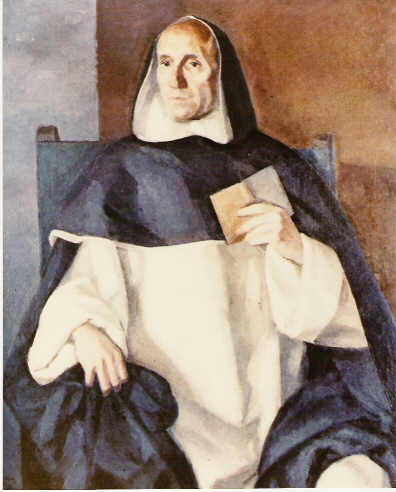
Historical context: a world that was changing radically.
Francisco de Vitoria was born at a time of profound historical transformation. Europe was progressively leaving the Middle Ages and beginning to enter the Modern Age. The discovery of America in 1492 had opened geographical, political and economic horizons completely unknown until then.
Spain was experiencing an unprecedented expansion process. After the dynastic union of Castile and Aragon under the Catholic Monarchs, the country had established itself as one of the great European powers. Added to this was the control of enormous territories in America, Italy and later, in other parts of the world. The Spanish Empire was beginning to take shape as the first truly global political structure.
However, this expansion posed enormous moral and legal dilemmas. The conquest of America generated unprecedented questions for which there were no clear answers in medieval tradition. Did indigenous peoples have rights? Was it legitimate to conquer discovered territories? Could the Christian religion be imposed by force? Were there moral limits to imperial power?
Most historical empires had responded to these questions from the logic of force. The winner imposed his will on the defeated. However, some intellectuals began to question this approach. Among them, Francisco de Vitoria stood out in an extraordinary way.
Another fundamental element was added to this situation: the birth of an increasingly internationalized economy. Trade between continents was growing rapidly. The flow of precious metals from America altered European prices. New financial, commercial and monetary practices emerged. All of this forced us to rethink the ethical bases of the economy.
At the same time, Europe was going through an unprecedented religious crisis due to the Protestant Reformation initiated by Martin Luther in 1517. The spiritual unity of Western Christianity was beginning to fracture. The debate over political and religious authority acquired enormous intensity.
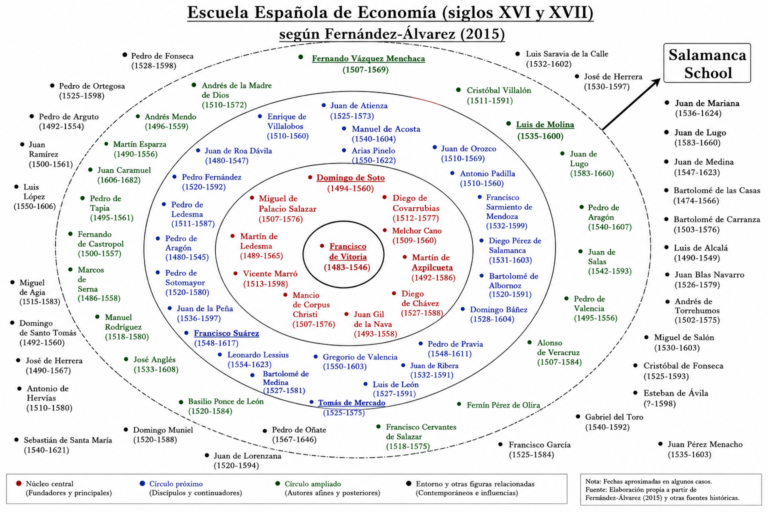
In this historical context, the School of Salamanca emerged, an extraordinary group of theologians, jurists and philosophers who tried to respond rationally to the new problems of the modern world. Francisco de Vitoria became the most influential figure of this intellectual movement.
Biography of Francisco de Vitoria
Francisco de Vitoria was born approximately in 1483 in Burgos, although some historians place his family origin in Vitoria, the city from which he would have taken his name. He belonged to a wealthy family, which allowed him access to a high-level intellectual training.
He entered the Dominican Order at a very young age, one of the most influential religious institutions of the time in the university and theological field. The Dominicans played a central role in the transmission of scholastic thought and in the study of the philosophy of Saint Thomas Aquinas.
His academic training took place in Paris, specifically at the Sorbonne University, one of the great European intellectual centers of the time. There he came into contact with humanist currents and the most advanced philosophical and theological debates of his time.
The Parisian experience was decisive in his intellectual evolution. Vitoria received a solid scholastic training, but also acquired a remarkable openness towards the new political, legal and cultural problems that were beginning to transform Europe.
In 1526 he was appointed Professor of Theology at the University of Salamanca, one of the most prestigious academic positions in the Hispanic world. From that position he developed most of his intellectual activity.
The University of Salamanca was then one of the main cultural centers in Europe. Students and teachers from multiple territories of the Spanish empire converged there. The institution became a privileged space to debate the great political and moral problems of the time.
Vitoria revolutionized university education. Faced with an excessively abstract and repetitive scholasticism, he introduced a much more practical approach connected to the real problems of society. His classes analyzed specific political, economic, legal and moral issues.
One of the most outstanding features of his intellectual personality was his critical independence. Although deeply Catholic and loyal to the Church, he did not hesitate to question certain political behaviors of the Spanish Empire when he considered that they violated fundamental moral principles.
He died in Salamanca in 1546, leaving an enormous influence on later generations of jurists, philosophers and theologians. Although he published relatively little during his lifetime, his university lectures circulated widely and were collected by his disciples.
Contemporaries of Francisco de Vitoria
| Nombre | Fechas | Ámbito | Relación o relevancia respecto a Vitoria |
|---|---|---|---|
| Erasmo de Róterdam | 1466–1536 | Humanismo | Gran referente intelectual europeo; influyó en el ambiente humanista de la época. |
| Martín Lutero | 1483–1546 | Reforma protestante | Exactamente contemporáneo; inició la Reforma en 1517. |
| Juan Calvino | 1509–1564 | Reforma protestante | Figura clave del protestantismo europeo. |
| Tomás Moro | 1478–1535 | Filosofía política | Autor de Utopía; reflexión humanista sobre política y sociedad. |
| Nicolás Maquiavelo | 1469–1527 | Ciencia política | Fundador del realismo político moderno; contraste radical con Vitoria. |
| Carlos I de España / Carlos V | 1500–1558 | Política imperial | Monarca del imperio español durante la actividad de Vitoria. |
| Hernán Cortés | 1485–1547 | Conquista americana | Conquistador de México; sus acciones generaron debates morales analizados por Vitoria. |
| Francisco Pizarro | 1478–1541 | Conquista americana | Conquista del Perú; ejemplo central en debates sobre legitimidad imperial. |
| Bartolomé de las Casas | 1474–1566 | Derechos indígenas | Defensor de los indígenas; coincidió con Vitoria en muchas posiciones éticas. |
| Domingo de Soto | 1494–1560 | Escuela de Salamanca | Discípulo y continuador de Vitoria. |
| Martín de Azpilcueta | 1492–1586 | Economía y Derecho | Coetáneo clave de la Escuela de Salamanca. |
| Melchor Cano | 1509–1560 | Teología | Discípulo directo de Vitoria. |
| Diego de Covarrubias | 1512–1577 | Derecho y Economía | Continuador del pensamiento salmantino. |
| Ignacio de Loyola | 1491–1556 | Religión | Fundador de la Compañía de Jesús. |
| Francisco Suárez | 1548–1617 | Filosofía y Derecho | No fue estrictamente contemporáneo; pertenece a la generación posterior influida por Vitoria. |
| Copérnico | 1473–1543 | Ciencia | Revolución astronómica contemporánea a Vitoria. |
| Andrés Vesalio | 1514–1564 | Medicina | Renovador de la anatomía moderna. |
| Miguel Servet | 1509–1553 | Medicina y teología | Humanista y científico perseguido por herejía. |
| Leonardo da Vinci | 1452–1519 | Arte y ciencia | Figura culminante del Renacimiento. |
| Miguel Ángel | 1475–1564 | Arte | Gran representante artístico del Renacimiento. |
| Tiziano | 1488–1576 | Pintura | Principal pintor del Renacimiento veneciano. |
| Francisco de los Cobos | 1477–1547 | Política | Principal secretario de Carlos V. |
| Juan Ginés de Sepúlveda | 1490–1573 | Filosofía política | Principal defensor intelectual de la conquista imperial frente a Las Casas. |
| Antonio de Nebrija | 1441–1522 | Filología | Autor de la primera gramática castellana. |
| Tomás de Mercado | 1525–1575 | Economía | Pertenece a la generación inmediatamente posterior salmantina. |
The great intellectual debates of his time
Francisco de Vitoria lived in a period marked by five great simultaneous historical revolutions:
- European global expansion after the discovery of America.
- The religious breakdown of the Protestant Reformation.
- The birth of the modern State.
- The rise of international commercial capitalism.
- The humanist and scientific Renaissance.
Very few thinkers participated intellectually in so many fundamental debates at once.
The main intellectual interlocutors of Vitoria
His most relevant interlocutors were:
| Figura | Tema de debate |
|---|---|
| Bartolomé de las Casas | Derechos indígenas y conquista |
| Juan Ginés de Sepúlveda | Legitimidad del dominio imperial |
| Martín Lutero | Autoridad religiosa y política |
| Erasmo | Humanismo cristiano |
| Maquiavelo | Naturaleza del poder político |
| Domingo de Soto | Economía, justicia y derecho natural |
Key difference between Vitoria and Machiavelli
One of the most interesting contrasts of the time is that between Machiavelli and Vitoria.
Machiavelli separates politics and morality: power must be maintained even through immoral methods if they are effective.
Vitoria maintains exactly the opposite: no political power is legitimate if it violates human dignity and natural law.
In some ways, much of modern political philosophy still oscillates between both traditions. Francis of Vitoria (1483–1546) was a contemporary of some of the most important figures of the Renaissance, the Protestant Reformation, Spanish imperial expansion, and the birth of political and scientific modernity.
The great intellectual debates of his time
Francisco de Vitoria lived in a period marked by five great simultaneous historical revolutions:
- European global expansion after the discovery of America.
- The religious breakdown of the Protestant Reformation.
- The birth of the modern State.
- The rise of international commercial capitalism.
- The humanist and scientific Renaissance.
Very few thinkers participated intellectually in so many fundamental debates at once.
The main intellectual interlocutors of Vitoria
His most relevant interlocutors were:
| Figura | Tema de debate |
|---|---|
| Bartolomé de las Casas | Derechos indígenas y conquista |
| Juan Ginés de Sepúlveda | Legitimidad del dominio imperial |
| Martín Lutero | Autoridad religiosa y política |
| Erasmo | Humanismo cristiano |
| Maquiavelo | Naturaleza del poder político |
| Domingo de Soto | Economía, justicia y derecho natural |
The great contributions of Francisco de Vitoria
The historical relevance of Francisco de Vitoria is due to the depth and originality of his contributions. His reflections affected essential issues related to human dignity, law, war, political sovereignty and international relations.
One of his greatest achievements was to affirm that all human beings have an intrinsic dignity regardless of their religion, culture or level of development. This idea may seem obvious today, but in the 16th century it represented a true intellectual revolution.
In the context of the conquest of America, many justified absolute domination over indigenous peoples by alleging their supposed cultural or religious inferiority. Vitoria frontally rejected this vision. He maintained that the indigenous people were fully human, rational and holders of natural rights.
This statement had enormous consequences. If indigenous peoples possessed rights, then conquest could not be justified simply by military force or religious grounds. Political power was subject to universal moral limits.
From this idea he developed a pioneering theory of international law. According to Vitoria, there are ethical and legal norms valid for all nations and peoples. No State can legitimately act outside of these principles.
This conception laid the foundations for the so-called “law of nations”, a direct antecedent of modern international law. His later influence would be enormous on thinkers such as Hugo Grotius and on the evolution of European international law.
Another fundamental area of his thought was the theory of just war. Vitoria did not defend absolute pacifism, but maintained that war can only be considered legitimate under certain extremely strict conditions.
The war had to respond to a just cause, be proportional and constitute the last possible resort. Furthermore, even during an armed conflict certain basic moral principles had to be respected.
These ideas anticipated many elements of contemporary international humanitarian law.
Vitoria also made important contributions in the economic field. Although he was not an economist in the modern sense of the term, he analyzed issues related to trade, prices, and property from an ethical and legal perspective.
He defended the legitimacy of international trade as long as it respected principles of justice. It recognized the right of individuals and towns to trade freely and move peacefully.
In many ways, his thinking anticipated contemporary debates about globalization, international trade, and human rights.
The School of Salamanca and the intellectual leadership of Vitoria
Francisco de Vitoria did not act in isolation. His influence gave rise to one of the most important intellectual movements in Spanish history: the School of Salamanca.
This group brought together theologians, jurists, philosophers and economists who developed extraordinarily advanced reflection on political, legal and economic issues.
Among his disciples and followers, figures such as Domingo de Soto, Martín de Azpilcueta, Luis de Molina, Francisco Suárez and Tomás de Mercado stood out.
The Salamanca School addressed problems that centuries later would be central to modern economics: inflation, value, prices, international trade, exchange rates and monetary theory.
Many historians consider that some members of this school anticipated ideas later developed by classical liberal economics.
However, his approach differed profoundly from contemporary economism. For the people of Salamanca, the economy had to be subordinated to ethical principles related to human dignity and the common good.
This combination of sophisticated economic analysis and moral concern constitutes one of the most original characteristics of the Salamanca School.
Vitoria’s influence was decisive because it provided the general intellectual framework within which many of these later reflections were developed.
The legacy of Francisco de Vitoria
The historical legacy of Francisco de Vitoria is difficult to exaggerate. His thought profoundly influenced multiple later intellectual traditions.
In the legal field, he is considered one of the founding fathers of modern international law. His ideas about the existence of universal norms applicable to all nations anticipated fundamental developments in contemporary law.
Current international institutions such as the United Nations or the International Court of Justice indirectly rely on principles whose early formulation can be found in Vitoria.
In the field of human rights, his defense of the universal dignity of all people constitutes a fundamental historical contribution. Long before the Enlightenment, Vitoria already affirmed that no political power can legitimately act against human dignity.
His influence also reached modern political philosophy. The idea that power has moral and legal limits later became one of the foundations of contemporary constitutionalism.
Furthermore, his thought represents one of Spain’s most important intellectual contributions to Western civilization. The School of Salamanca demonstrated that Hispanic thought of the 16th century was among the most advanced in Europe.
For a long time, this contribution was relatively ignored outside certain academic circles. However, in recent decades numerous historians, economists and jurists have once again claimed the importance of Vitoria and the School of Salamanca.
Current validity of your thought
One of the most surprising aspects of Francisco de Vitoria is the enormous relevance of many of his reflections.
The contemporary world continues to face questions very similar to those he tried to answer five centuries ago. Are there moral limits to power? How should nations relate? What rights do all people have simply because they are human?
Current debates on immigration, international wars, human rights and globalization show the extent to which Vitoria’s insights remain relevant.
His defense of the universal dignity of all people is especially important in a context marked by identity tensions, nationalism and cultural conflicts.
His reflection on the ethical limits of the economy also acquires enormous relevance. Faced with a purely technocratic or utilitarian vision, Vitoria recalled that economic activity must be oriented toward human good.
Even in issues related to artificial intelligence and new technologies, interesting parallels can be found. Vitoria insisted that no technical or political advance justifies violating human dignity.
In a world where technological capabilities grow faster than ethical reflection, this warning has enormous relevance.
Likewise, his thinking offers valuable tools to reflect on the contemporary international order. The idea that there are universal principles valid for all States remains fundamental for global coexistence.
Conclusion
Francisco de Vitoria was much more than a 16th century theologian. He was one of the great intellectual architects of Western legal and political modernity.
In an era dominated by empires, religious wars and colonial expansion, he defended deeply innovative principles: the universal dignity of the human being, the existence of moral limits to power and the need for a law valid for all nations.
His thought was born in response to specific problems of his time, but it reached a universal dimension that explains its extraordinary current relevance.
The intellectual greatness of Vitoria lies precisely in having understood that force, political power or economic development cannot constitute the ultimate foundation of a just civilization.
Every truly human society must recognize that each person possesses a dignity that no power can legitimately destroy.
Five centuries later, this idea continues to be one of the fundamental pillars of contemporary democracies and international law.
For this reason, Francisco de Vitoria does not belong only to the past. It continues to be part of the great debates of the present and probably also of the future.