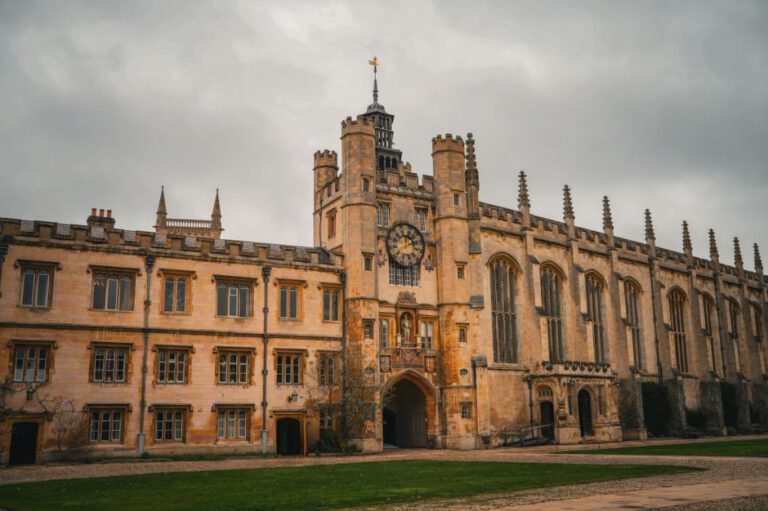
The origins of the University of Salamanca: historical context, birth and consolidation of a decisive intellectual center for Europe (Part 2)
4. Economic and social factors that favored the creation of the University of Salamanca
4.1. The urban and commercial growth of the Late Middle Ages
The birth of the University of Salamanca was closely related to the economic and urban growth that Western Europe experienced between the 12th and 13th centuries. During this period, many cities began to expand thanks to trade, craft development, and improved communication routes. Salamanca was no exception. Its strategic position within the Crown of León and later Castile favored its integration into important economic and cultural circuits.
Urban growth generated new social needs. Medieval cities were no longer only military or religious spaces; They were beginning to become administrative, commercial and legal centers. This transformation required trained professionals. Merchants, courts, municipal authorities and ecclesiastical structures needed people trained in law, accounting, rhetoric and administration.
Economic expansion also increased the circulation of people and knowledge. Students and teachers traveled between European cities seeking training and academic opportunities. Universities emerged precisely in those cities capable of economically supporting a growing student population. Lodging, food, manuscript production and commercial activity linked to teaching generated an important local economic impact.
In Salamanca, the university quickly began to become one of the main urban economic engines. The constant arrival of students boosted commerce and favored the growth of specialized services. The relationship between university and city was from the beginning symbiotic: the university needed a city capable of supporting it and the city benefited enormously from the university presence.
Furthermore, economic growth allowed certain social sectors to access higher education. Although the medieval university remained elitist, urban expansion progressively expanded the number of people interested in academic training as a means of social and professional advancement.
4.2. The emergence of new administrative elites
One of the most important changes in late medieval Europe was the appearance of new elites linked to knowledge and not only to the noble lineage. As medieval states became more complex, they began to need specialized officials capable of managing documents, enforcing laws, and administering territories.
The university played a decisive role in the formation of these new technical and bureaucratic elites. In the case of Salamanca, many of its students aspired to hold positions in courts, royal chancelleries or ecclesiastical institutions. Legal and administrative knowledge began to become a source of prestige and power.
This phenomenon had profound social consequences. University education partially opened spaces of social mobility for wealthy urban sectors. Although the nobility continued to occupy dominant positions, it was increasingly difficult to govern without academically trained specialists. Knowledge was beginning to become political and economic capital.
The Castilian Crown quickly understood the usefulness of these professionals. The jurists and lawyers trained in Salamanca actively participated in the institutional construction of the kingdom. Many would end up playing essential roles in the administration of justice, diplomacy and legislative development.
The university was thus transformed into a factory for administrative elites. His influence was not limited to the intellectual sphere; It directly affected the functioning of medieval political and economic power.
4.3. The importance of literacy and written culture
The medieval university expansion coincided with a progressive growth of written culture. Although the majority of the population remained illiterate, political and economic structures increasingly depended on written documents. Contracts, privileges, tax records and legislation required specialists capable of reading, writing and interpreting complex texts.
The University of Salamanca emerged precisely in a context where writing acquired enormous strategic value. Knowledge of grammar, logic and rhetoric were not simple intellectual exercises; They were fundamental tools to participate in administration and public life.
The production of manuscripts became a relevant economic activity within the university environment. Before the invention of the printing press, copying books was a slow and expensive process. Universities stimulated the emergence of specialized workshops and favored the circulation of academic texts throughout Europe.
Access to written knowledge also transformed forms of reasoning. Medieval university culture encouraged debate, logical argumentation, and systematic analysis of texts. These intellectual practices profoundly influenced the subsequent development of European thought.
In Salamanca, the consolidation of libraries, archives and academic traditions turned the city into an important center of written culture. The university was instrumental in expanding functional literacy among the kingdom’s political and religious elites.
4.4. The social appeal of university knowledge
The medieval university not only offered intellectual training; It also provided social prestige and professional opportunities. Obtaining a university degree began to clearly differentiate those with higher education from the rest of the population.
In a deeply hierarchical society, knowledge progressively became a form of social advancement. University students could aspire to important ecclesiastical positions, administrative positions or diplomatic functions. This generated a strong attraction towards institutions like Salamanca.
University life also built a specific cultural identity. The students formed relatively autonomous communities, with their own legal privileges and an intense intellectual life. Thus arose an authentic medieval university culture characterized by academic debates, scholastic disputes and international mobility.
The prestige of Salamanca increased rapidly thanks to the quality of its teachings and the institutional recognition obtained from the Crown and the papacy. Over time, studying in Salamanca began to be perceived as a symbol of intellectual excellence within the Hispanic world.
The social attraction of university knowledge partly explains the enormous growth of Salamanca during the following centuries. The university became a cultural reference capable of attracting talent, resources and prestige from multiple European territories.
5. Religious and cultural factors in the birth of Salamanca
5.1. The influence of the Church in the medieval intellectual world
The medieval Church played a central role in the development of European universities and particularly in Salamanca. For centuries, the clergy had been virtually the sole repository of written knowledge in Western Europe. Monasteries and cathedrals preserved manuscripts, taught grammar and trained those who had to integrate into the ecclesiastical structure.
The birth of the university did not represent a break with the Church, but rather an evolution of its educational systems. Many of the first teachers and students belonged to the clergy and theological teachings occupied a privileged place within the academic curriculum.
The Church needed prepared intellectuals capable of correctly interpreting Christian doctrine and responding to the intellectual challenges of the time. The rediscovery of Aristotle and the expansion of new philosophical currents forced the development of more sophisticated theological tools.
In Salamanca, theology would end up achieving enormous international prestige, especially during the 15th and 16th centuries with the development of the future School of Salamanca. But even in its medieval origins, the religious dimension was inseparable from university activity.
The close relationship between the Church and the university also made it possible to guarantee institutional stability, resources and legitimacy. Ecclesiastical support was one of the fundamental pillars that made Salamanca’s consolidation possible.
5.2. Scholasticism and the medieval intellectual method
One of the most important cultural elements of the medieval university was the development of scholasticism, an intellectual method based on logical argumentation and the systematic analysis of texts. Scholasticism dominated much of European university thought between the 12th and 15th centuries.
The scholastic method consisted of confronting intellectual authorities, raising objections and seeking rational solutions through debate. This system favored critical reasoning within certain doctrinal limits and contributed enormously to European intellectual development.
The University of Salamanca fully adopted this methodological tradition. Academic disputes and comments on texts were an essential part of university teaching. Students learned not only content, but also rigorous forms of argumentation.
Scholasticism also had a lasting impact on disciplines such as law, philosophy, and theology. His insistence on rational analysis indirectly contributed to the later development of modern thought.
Although today it may seem excessively formalistic, scholasticism represented an authentic intellectual revolution for medieval Europe. Salamanca was one of the spaces where this model reached greater development and sophistication.
5.3. Cultural coexistence in the Iberian Peninsula
The medieval Iberian Peninsula was one of the most complex and dynamic cultural spaces in Europe. The interaction between Christians, Muslims and Jews favored an intense circulation of scientific, philosophical and linguistic knowledge.
Contact with the Islamic world allowed the recovery of classical Greek works that had disappeared in much of Western Europe. Mathematics, astronomy, medicine and philosophy reached the Christian world thanks to translations carried out in peninsular territories.
Although Salamanca was a Christian university, it benefited greatly from this broader intellectual context. The Iberian cultural environment facilitated access to diverse knowledge and stimulated interest in advanced scientific and philosophical disciplines.
The Arab and Jewish influence is especially perceived in the transmission of Aristotle, Galenic medicine and certain mathematical and astronomical knowledge. Without this cultural exchange, European university development would have been much slower.
The Iberian Peninsula thus acted as an intellectual bridge between East and West. Salamanca was born precisely in one of the moments of greatest intensity of this cultural transfer.
5.4. Latin as an international language of knowledge
Latin played a fundamental role in the success of medieval universities. It functioned as a common academic language that allowed communication between students and teachers from different European territories.
Thanks to Latin, a student trained in Salamanca could read texts produced in Paris or Bologna and participate in international intellectual debates. This common language greatly favored the circulation of ideas and the construction of an authentic European academic community.
University education in Salamanca was carried out entirely in Latin. Classes, disputes, manuscripts and exams used this language, which reinforced the international character of the institution.
The mastery of Latin also acted as a mechanism of social and intellectual differentiation. Accessing university knowledge required years of prior training and solid linguistic preparation.
The use of Latin allowed Salamanca to fully integrate into the great medieval European intellectual network. The university was not a locally isolated phenomenon, but an active part of a shared international academic culture.
6. The initial development of the University of Salamanca
6.1. The first teachings and faculties
During its first centuries of existence, the University of Salamanca progressively configured an academic structure similar to that of the great European universities. Initial teachings focused mainly on liberal arts, canon law, civil law, theology and medicine. These disciplines responded directly to the political, religious and administrative needs of medieval society.
The Faculty of Arts constituted the basic level of university training. There students learned grammar, logic and rhetoric before entering higher education. This educational model aimed to form the capacity for argumentation and intellectual analysis, essential elements within medieval scholastic culture.
The law quickly acquired extraordinary weight within Salamanca. Both the Crown and the Church needed legal specialists capable of administering territories, resolving conflicts and drafting official documentation. Salamanca legal education began to gain international prestige thanks to the rigor of its methods and the quality of its teachers.
Theology also achieved enormous importance. The university not only trained administrators and jurists, but also religious intellectuals prepared to participate in complex doctrinal debates. This theological dimension would later be decisive in the development of the School of Salamanca during the 16th century.
Early academic organization demonstrates that the medieval university was much more than an abstract cultural center. Its structure responded directly to the practical needs of the political, religious and economic power of the time.
6.2. The profile of medieval students and teachers
The medieval university community was extraordinarily diverse and dynamic. Students came to Salamanca from different territories of the Iberian Peninsula and also from other places in Europe. Many were young people linked to the clergy, although children from wealthy urban families interested in administrative or legal careers gradually began to join.
Medieval student life was hard and demanding. Students had to face long study days, financial difficulties and strict academic discipline. Many lived in precarious conditions and depended on ecclesiastical or family help to support themselves during years of training.
Teachers occupied an ambivalent social position. Some achieved enormous intellectual prestige and political influence, while others suffered relatively unstable economic conditions. Medieval university teaching was largely based on the annotated reading of texts and public disputes between teachers and students.
Academic mobility was a central feature of the European university system. Many teachers had previously studied in Paris, Bologna or other major universities. This constant exchange favored the circulation of ideas and contributed to maintaining a relatively homogeneous academic culture throughout Western Europe.
The Salamanca university community thus began to develop its own identity marked by intellectual debate, internationalization and academic prestige. This environment would be fundamental for the subsequent intellectual rise of Salamanca in modern centuries.
6.3. The residence halls and the academic organization
With the growth of the university, the need arose to create more complex structures for accommodation, training and academic control. Then the residence halls appeared, institutions initially designed to offer residence and financial support to students with talent but limited resources.
These schools played a decisive role in the consolidation of university life in Salamanca. They were not simple residences; They functioned as authentic academic communities with their own rules, disciplinary systems and complementary training programs.
The residence halls also progressively transformed into spaces of intellectual and political power. Many of its members would end up occupying prominent positions within the Church, the royal administration or the judicial system. Belonging to certain schools generated prestige and lasting networks of influence.
Medieval university organization was surprisingly sophisticated. There were statutes, disciplinary procedures, election systems, and relatively autonomous internal governance mechanisms. This institutional autonomy was key to preserving a certain academic independence from external powers.
In Salamanca, the evolution of the residence halls contributed enormously to the strengthening of the university as a stable and prestigious institution. Its influence would be especially visible during the 15th and 16th centuries, when the university reached its maximum intellectual splendor.
6.4. The international projection of Salamanca
From relatively early stages, the University of Salamanca began to acquire prestige beyond the Iberian Peninsula. Its pontifical recognition, the quality of its legal and theological studies and the support of the Crown favored its integration into the European university network.
The mobility of students and teachers decisively helped build that international reputation. Salamanca actively participated in the great medieval intellectual debates and maintained indirect contact with other important universities such as Paris or Bologna.
International prestige not only had cultural value. It also politically strengthened the Castilian Crown, which could present itself as the promoter of one of the main European intellectual centers. The university thus became an instrument of cultural and diplomatic influence.
The growing academic reputation of Salamanca also favored intellectual production. Professors and students began to prepare legal commentaries, philosophical treatises and theological works that circulated throughout different European territories.
The international dimension of Salamanca partly explains why centuries later the university would play a central role in global debates on economics, natural law, trade or human rights during the expansion of the Spanish Empire.
7. Salamanca and the birth of a lasting intellectual tradition
7.1. The university as a seed of the future School of Salamanca
Although the so-called School of Salamanca would reach its maximum splendor in the 16th and 17th centuries, its intellectual roots began to form much earlier. The medieval academic environment of Salamanca created the necessary conditions for the subsequent development of one of the most influential philosophical, legal and economic traditions in European history.
The combination of scholastic rigor, intellectual openness and strong legal training allowed for the generation of a particularly sophisticated university culture. Salamanca early developed a tradition based on rational debate and critical analysis of political and moral problems.
The presence of great theologians and jurists favored the consolidation of an academic community capable of producing original thought. Over time, this tradition would end up influencing fundamental issues such as international law, monetary theory, the legitimacy of political power or the rights of indigenous peoples.
The medieval university thus acted as a platform for intellectual accumulation. Later generations inherited academic structures, libraries, teaching methods, and intellectual networks that made possible the extraordinary flourishing of the 16th century.
Without the foundations established during the medieval centuries, there would hardly have subsequently been a School of Salamanca capable of influencing modern economics, political philosophy and international law.
7.2. Salamanca as a symbol of Hispanic knowledge
Over the centuries, the University of Salamanca became one of the main cultural symbols of the Hispanic world. His prestige widely transcended the academic field and became part of Spain’s intellectual identity.
The university represented the connection of the Hispanic monarchy with European knowledge and with the international university tradition. Many of the great intellectuals, jurists and theologians of the empire passed through its classrooms.
Salamanca influence also spread to America after Spanish overseas expansion. The Salamanca university model served as a reference for numerous academic institutions founded in the New World.
The city itself began to identify deeply with the university. Architecture, urban life and economic activity were linked for centuries to the academic presence. Salamanca came to be perceived as a city of knowledge.
This cultural symbolism still remains today. The University of Salamanca continues to be one of the most recognized academic institutions in the Hispanic world and a historical benchmark of European thought.
7.3. The medieval heritage in the contemporary university
Many central elements of the modern university have direct roots in medieval institutions such as Salamanca. The organization by faculties, academic titles, systems of intellectual debate and university autonomy largely come from that period.
The medieval university also created the idea of an international academic community based on the exchange of knowledge and intellectual mobility. Although the current context is radically different, certain fundamental dynamics remain recognizable.
The medieval emphasis on rational argumentation and critical analysis also left a lasting imprint on the Western scientific tradition. Even contemporary disciplines far from scholasticism maintain reasoning structures indirectly inherited from that university world.
In Salamanca, historical continuity is especially visible. The university preserves spaces, symbols and traditions that connect directly with its medieval origins. This continuity contributes enormously to its institutional prestige.
Understanding the medieval origins of Salamanca allows us to better understand not only Spanish university history, but also the general evolution of Western academic institutions.
7.4. The historical legacy of the University of Salamanca
The legacy of the University of Salamanca goes far beyond its age. Its true historical importance lies in having actively participated in the intellectual construction of Europe and the Hispanic world.
From its medieval origins, Salamanca contributed to training jurists, theologians, administrators and thinkers who played fundamental roles in the political and cultural evolution of Spain. The university helped consolidate state structures, develop legal traditions, and expand European academic thought.
Its influence reached global dimensions during the Modern Age thanks to the Spanish expansion towards America. Many fundamental discussions on economics, morality, trade or human rights had one of their main intellectual settings in Salamanca.
Furthermore, the university represents an extraordinary example of historical continuity. Few European institutions have maintained such constant academic activity and such significant cultural influence for more than eight centuries.
The history of Salamanca shows that universities are not only places of teaching. They are institutions capable of transforming societies, building ideas and shaping entire civilizations.
Conclusions
The University of Salamanca was born at a time of profound political, economic, social and cultural transformations in medieval Europe. Its appearance was neither accidental nor isolated. It was the result of multiple converging factors: the strengthening of monarchies, urban growth, the expansion of law, the influence of the Church, the recovery of classical knowledge and the growing need to train administrative and intellectual elites.
The Iberian Peninsula also offered especially favorable conditions due to its cultural wealth and the intense circulation of knowledge between Christians, Muslims and Jews. Salamanca knew how to take advantage of this context to quickly become one of the main European university centers.
The support of Alfonso IX, Alfonso X the Wise and the papacy allowed the consolidation of a stable, prestigious and international institution. From its first centuries, the university played essential functions not only in the academic field, but also in the political and administrative construction of the Hispanic kingdoms.
Its historical legacy is immense. Salamanca not only trained generations of jurists, theologians and administrators; He also laid the intellectual foundations of the future School of Salamanca, one of the most influential currents in the history of Western economic, legal and philosophical thought.
Understanding the origins of the University of Salamanca allows us to better understand how modern universities emerged and why knowledge became one of the great engines of historical transformation in Europe.
Bibliography
- Beltrán de Heredia, V. (1983). Cartulary of the University of Salamanca. University of Salamanca Editions.
- García and García, A. (1990). History of the University of Salamanca. University of Salamanca Editions.
- Kagan, R.L. (1981). Universities in Castile, 1500–1810. Princeton University Press.
- Pérez Martín, A. (2012). The University of Salamanca and its jurists. University of Salamanca.
- Rashdall, H. (2010). The Universities of Europe in the Middle Ages. Oxford University Press.
- Rodríguez-San Pedro Bezares, L. E. (Coord.) (2002). History of the University of Salamanca. Vols. I-IV. University of Salamanca Editions.
- Ruiz-Serrano, E. (2015). The University of Salamanca and power. Flint.
- Southern, R.W. (1995). Scholasticism and medieval society. Economic Culture Fund.
- Verger, J. (1994). Les universities au Moyen Âge. Presses Universitaires de France.
- Villarroel González, Ó. (2018). Alfonso X the Wise and the culture of his time. Marcial Pons.