The School of Salamanca: the thought that changed the world
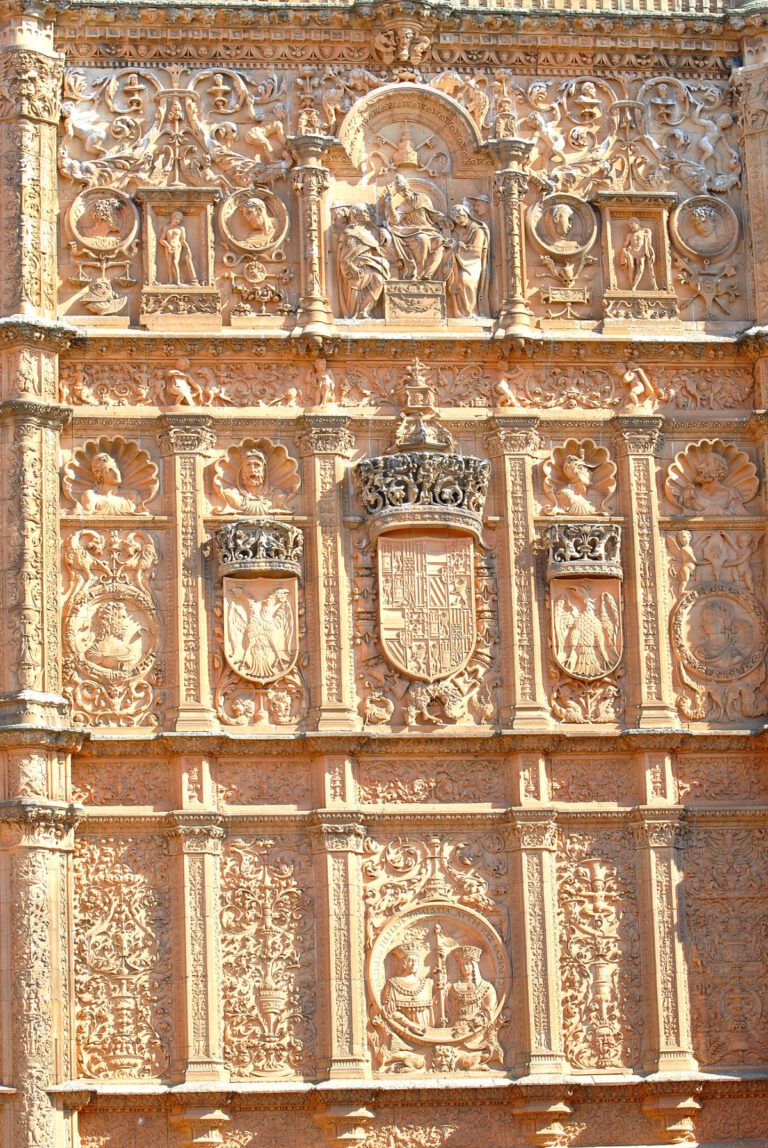
In the heart of the 16th century, when the Spanish Empire dominated much of the known world and universities were bustling with ideas, an extraordinary group of theologians, jurists and philosophers gathered in Salamanca led one of the quietest and most profound intellectual revolutions in Western history. Its name: the School of Salamanca.
What was the Salamanca School?
The School of Salamanca was not a formal institution nor a movement with its own manifesto. It was, rather, a current of thought that flourished around the University of Salamanca—the most important in Spain and one of the most prestigious in Europe—during the 16th and 17th centuries. Its protagonists were, for the most part, Dominicans and Jesuits deeply marked by the Thomistic tradition, that is, by the thought of Saint Thomas Aquinas.
What made these thinkers unique was their ability to apply theology and scholastic philosophy to the great problems of their time: the conquest of America, international trade, the legitimacy of political power, the rights of indigenous peoples or the fair value of goods. In other words, they used the tools of medieval thought to answer radically modern questions.
The historical context: a world that was changing at full speed
To understand the importance of the Salamanca School, you have to look at its time. The 16th century was a time of unprecedented transformations. The discovery of America had opened not only new trade routes, but also profound moral questions: Did the conquistadors have the right to subjugate the indigenous peoples? Could a Christian king rule over infidels? Was slavery legal?
At the same time, the expansion of trade and the rise of financial markets raised pressing economic questions: What is the right price? Is it a sin to charge interest on a loan? How should the exchange of goods be regulated? All of Europe was looking for answers, and Salamanca provided them.
The great thinkers of the School
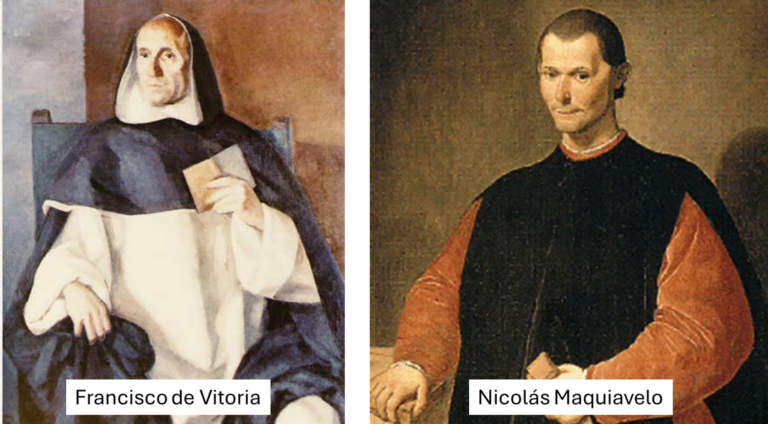
The founding figure of the School of Salamanca is Francisco de Vitoria (1483-1546), Dominican and Prima Professor of Theology in Salamanca. His Relectiones—solemn lectures he delivered before the university—laid the foundations of modern international law. Vitoria argued that the indigenous peoples of America possessed natural rights that could not be taken away by any temporal or spiritual power. He was, in many ways, the first systematic advocate of universal human rights.
After Vitoria, the school was enriched by thinkers such as Domingo de Soto, who delved into the theory of justice and natural law; Martín de Azpilcueta, known as Doctor Navarro, who made fundamental contributions to economics by formulating an early version of the quantitative theory of money; and Francisco Suárez, whose philosophy of law decisively influenced Grotius, Locke and the founders of modern liberal thought.
A legacy that still speaks to us
The legacy of the Salamanca School is vast and, to a large extent, still little known by the general public. His contributions to international law, moral philosophy and economic theory were several centuries ahead of their time. Concepts such as popular sovereignty, natural rights, the fair price or the theory of money, which today we consider part of the intellectual landscape of the West, have their roots in the classrooms and cloisters of Salamanca in the 15th century.
This blog was born with the purpose of exploring that legacy: its thinkers, its ideas, its debates and its influence on the world we inhabit. Because to understand the School of Salamanca is to understand an essential chapter of how the West learned to think about law, justice and economics.
Welcome to Escuela de Salamanca.